Proud to welcome students from the following 750+ institutions
Introduction
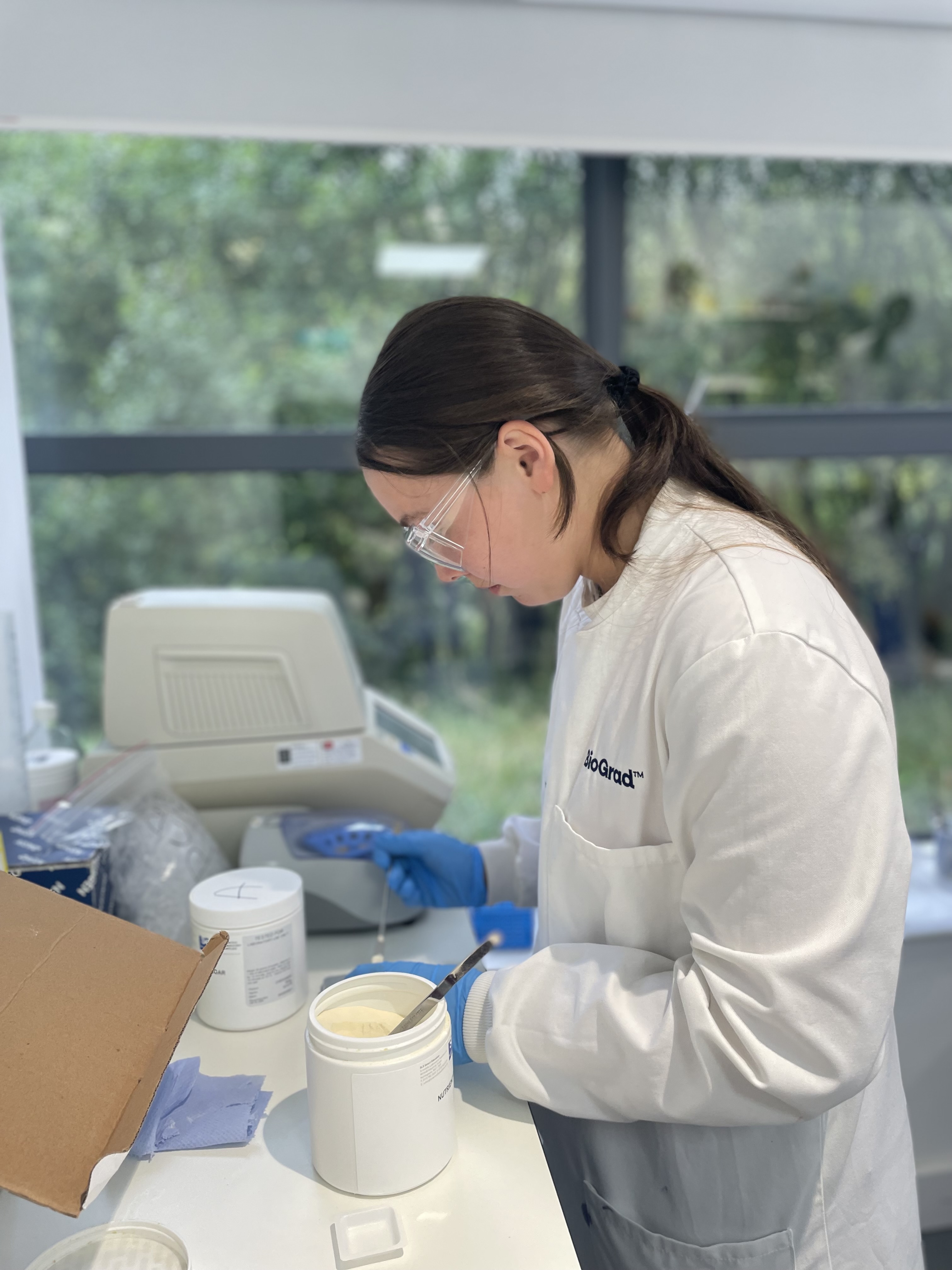
BioGrad Education’s Laboratory Skills is an intensive, hands-on course designed to give students early exposure to essential laboratory skills. This comprehensive course introduces students to fundamental techniques commonly used in modern research, giving them first-hand practical experience and valuable insight into working in UK laboratories. Delivered by experienced scientists in laboratory facilities at the University of Chester, this course provides a unique opportunity for participants to gain practical experience and build foundational knowledge in a professional laboratory environment.
Overview & What to Expect
This course allows students the opportunity to learn blood typing, microbiology, bacterial culture, ELISA, PCR, gel electrophoresis and much more through hands-on learning. Students carry out their own lab work throughout, gaining vital experience that will be a benefit to both university applications and future careers.
The Laboratory Skills course runs from 9:30am – 4pm for 5 consecutive days with a 1-hour break for lunch each day. We teach at a low student to tutor ratio (10:1) to ensure that all students are closely supervised and encouraged throughout their programme, maximising their experience.
All our 5-day courses for 16-19 year olds can be used as your Gold DofE Residential! We will also take photos of you during your time in the laboratories which will be sent to you upon completion, you can use these to begin building your LinkedIn presence and demonstrate your passion for science (this is looked upon incredibly favourably by universities!). You can opt for a personalised reference written by our senior scientists to be sent to a member of staff at your school/college, this can be used to support your UCAS application.
Who Is This Course For?
This course is ideal for students aged 16-19 with an interest in laboratory science and scientific research, providing excellent hands on experience for those considering higher education and careers in scientific fields. Experience gained and skills learnt act as highly valuable points of reference during university or job applications and interviews.
Prepare to gain confidence, skills, and insights in a challenging yet rewarding environment, where every moment counts. Join us for an unparalleled introduction to Laboratory Skills!
Course Content
Day 1: Laboratory Safety, Pipetting & Blood Typing
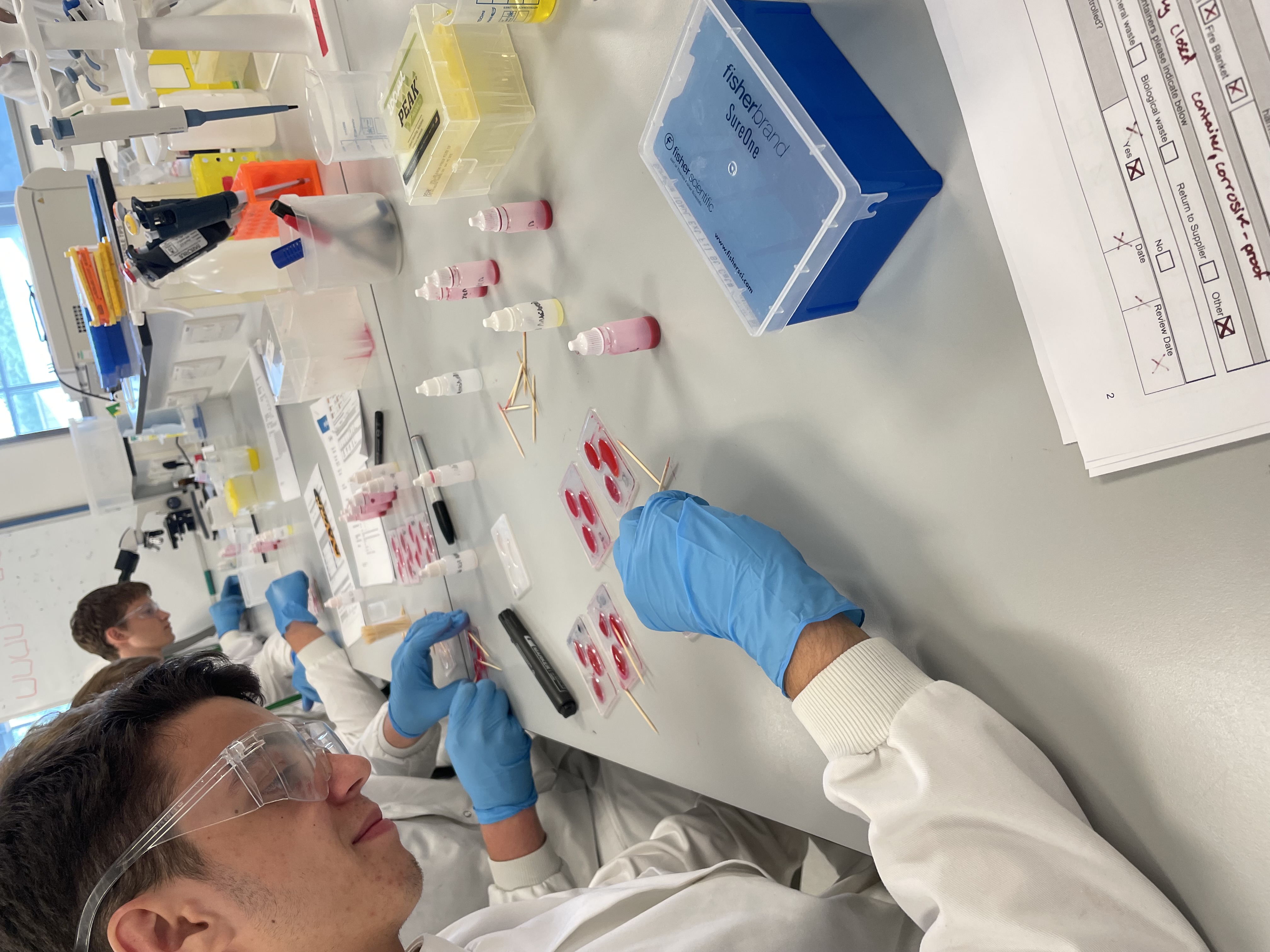
Begin the week by becoming familiar with the laboratory environment and the principles of working safely within a professional laboratory. Students will explore risk assessments, COSHH, hazard labels and the correct use of PPE before developing confidence using laboratory pipettes and microlitre measurements.
Students will also explore blood groups, antibodies, gene inheritance and the Rhesus Factor (Rh) system before applying their knowledge through practical blood typing and other laboratory activities.
Skills Covered:
Laboratory Safety, COSHH and PPE
Micropipetting
Serial Dilution
Blood Typing and Rh Factor Identification
Blood Smearing
Microscopy
Day 2: Microbiology, Bacterial Culture & Antibiotic Sensitivity
Explore key microbiological principles including bacterial identification, Gram-positive and Gram-negative bacteria, bacterial growth and aseptic technique. Students will learn how microorganisms are cultured and investigated within a laboratory environment.
Students will apply these principles through hands-on practical work, preparing microbiological media and bacterial cultures before carrying out techniques such as plate spreading and streaking, antibiotic sensitivity testing and microscopy.
Skills Covered:
Aseptic Technique
Microbiological Media Preparation
Bacterial Culture
Serial Dilution
Plate Spreading and Streaking
Antibiotic Sensitivity Testing
Microscopy
Day 3: Immunology, ELISA & Diagnostic Testing
Students will explore core immunological principles, antibodies and the role of diagnostic tools used in modern laboratory settings. They will be introduced to ELISA, learning how the technique works, the different types of ELISA and how it can be applied within diagnostic testing.
Students will then put their knowledge into practice by carrying out an indirect ELISA and analysing their experimental results.
Skills Covered:
Core Immunology Principles
Antibody-Antigen Interactions
ELISA
Diagnostic Testing
Experimental Result Analysis
Day 4: PCR, Gel Electrophoresis & DNA Analysis
Students will develop their understanding of DNA and molecular biology, including DNA replication and the principles behind PCR. They will explore the components required for a PCR reaction and learn how this widely used technique can be applied within modern laboratory research.
Students will prepare PCR reactions and agarose gels before loading their samples and carrying out gel electrophoresis. They will also use a NanoDrop to investigate nucleic acid concentration and purity.
Skills Covered:
PCR Preparation
DNA Analysis
Agarose Gel Preparation
Gel Electrophoresis
Nucleic Acid Quantification Using a NanoDrop
Day 5: Scientific Research, Journal Analysis & Presentations
Finish the week by exploring how scientific research is communicated and evaluated. Students will learn how to find and identify reliable scientific literature using resources such as PubMed and Google Scholar and develop an understanding of how scientific journal articles are structured.
Working in groups, students will analyse a selected research article, identify its key findings and conclusions and prepare a presentation based on their work, developing important transferable skills used throughout higher education and scientific careers.
Skills Covered:
Scientific Literature Searching
Critical Analysis
Interpretation of Scientific Research
Teamwork
Scientific Communication
Presentation Skills
Learning Outcomes:
During this course, students will learn skills beneficial for any university application including:
Working safely in a laboratory environment.
Understanding risk assessments, COSHH, hazard labels and appropriate PPE.
Using micropipettes accurately and effectively.
Performing serial dilutions.
Performing blood typing and identifying Rh factors.
Preparing and analysing blood samples.
Performing blood smearing and microscopy.
Applying proper aseptic technique.
Preparing microbiological media and bacterial cultures.
Performing bacterial plate spreading and streaking.
Carrying out antibiotic sensitivity testing.
Understanding key immunological principles and antibodies.
Understanding the principles and applications of ELISA.
Carrying out an indirect ELISA and analysing the results.
Understanding DNA replication and the principles of PCR.
Preparing PCR reactions.
Preparing and running agarose gel electrophoresis.
Using a NanoDrop to assess nucleic acid concentration and purity.
Finding and critically analysing scientific journal articles.
Presenting scientific findings as part of a group.
Time is given throughout the course for students to gain a proper understanding of the skills being taught, with guidance and support available throughout each practical session.
What Our Students Say
Modern Facilities & Real Lab Experience
“Their facilities were modern and advanced and they offered us access to equipment,
such as PCR and Gram staining, that I had never used before. All in all, it was a great
experience and has made me consider a career in a biomedical lab in the future.”
— Emma, Biomedical Science Student
Supportive Instructors & Practical Guidance
“All the instructors were super supportive. I learnt a lot and they explained new and
difficult concepts really effectively, as well as providing lots of guidance with the
practical elements. I had a great week and really recommend this for your DofE residential
or just for some experience in general.”
— Lou, Summer 2024
Prerequisites
Students attending this course are typically on track to apply for biomedical science undergraduate programmes (or similar) with a background studying science subjects.
A level Biology or equivalent study is recommended to keep up with the course material.
Students must be between the ages of 16 and 19 at course commencement to be eligible.
Duke of Edinburgh's Award
BioGrad is an Approved Activity Provider for the Duke of Edinburgh’s Award. This course may be used as your Duke of Edinburgh Gold Residential Award, which can be signed off by the course leader on the final day.
Please provide your Duke of Edinburgh Award number on your registration form at the time of booking your course.
Students using this course as their Gold DofE Residential must stay in the on-site student accommodation. Please note that the course fee does not include accommodation.
Accommodation MUST be paid at least 28 days in advance of course commencement.
Real feedback from students who joined our Laboratory Skills course.
University of Warwick – Biomedical Science
★★★★★
“Practical Lab Skills That Gave Me a Head Start”
The lab skills that we developed throughout the duration of the week were immensely helpful in my A level biology course as I was already prepared for them before my classmates did. I was more able to keep up with the practical side of my classes because i already had the skills needed.
Him Yick YeungLaboratory Skills
Purdue University (USA) – Applied physics with Nuclear engineering
★★★★★
“Transferable Lab Skills Beyond the Classroom”
The most useful part of the week for me was the practical lab experience and the demonstration of centiran lab procedures. Although it was biomedical based, it was still very useful to me as a physics student because of the transferable practical skills whilst in a lab that I can apply to physics labs.
Saleh FaizLaboratory Skills
Course Details
Price
The cost of this course is £1200
You can reserve your place on this course with a deposit of just £300.00 if you are booking more than 28 days in advance. The remaining balance is due four weeks prior to the course start date
You can also choose to pay for this course in 6 instalments if you are booking more than 26 weeks in advance, or 12 instalments if you are booking more than 54 weeks in advance
Accommodation
Student accommodation is available on campus at The University of Chester where BioGrad Education 2027 summer schools are hosted.
Students attending summer school courses can select accommodation at the time of booking your course, the confirmation email sent after booking will contain a link for you to pay for your accommodation (at least 28 days prior to course commencement.)
Please note, accommodation is not included in the course fee. Student accommodation is available at a rate of £250 per week (5 nights, checking in on the Sunday prior to your course and checking out on the Friday your course finishes.)
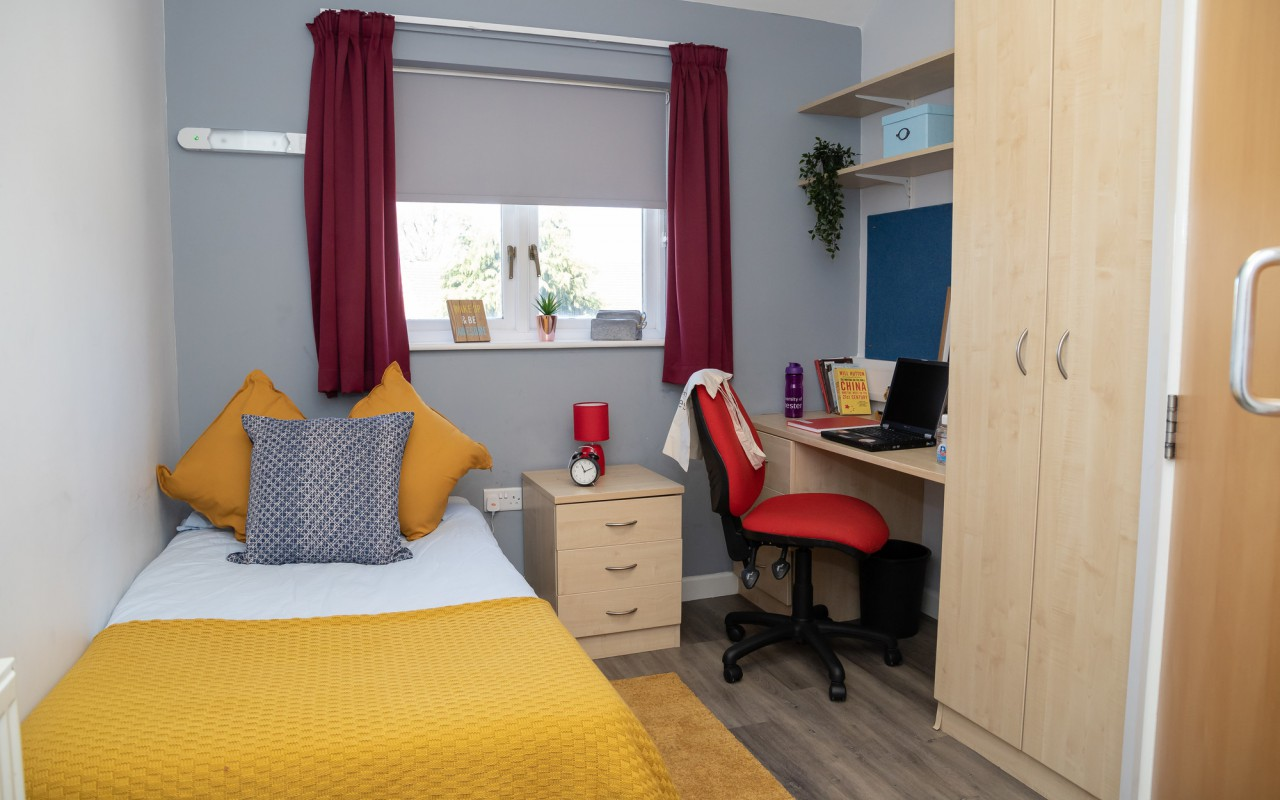
Each student will receive their own private, single occupancy bedroom in either a flat or house, shared exclusively with fellow BioGrad Education summer school students. Facilities such as living space, kitchens and bathrooms are shared with a small number of fellow students.
You can opt in for 5 nights student accommodation alongside your course (check in Sunday and check out Friday), at a cost of £250. Accommodation is hosted on campus at The University of Chester and full support is provided by our Student Services and Safeguarding teams.